A Glimpse into Mas Village
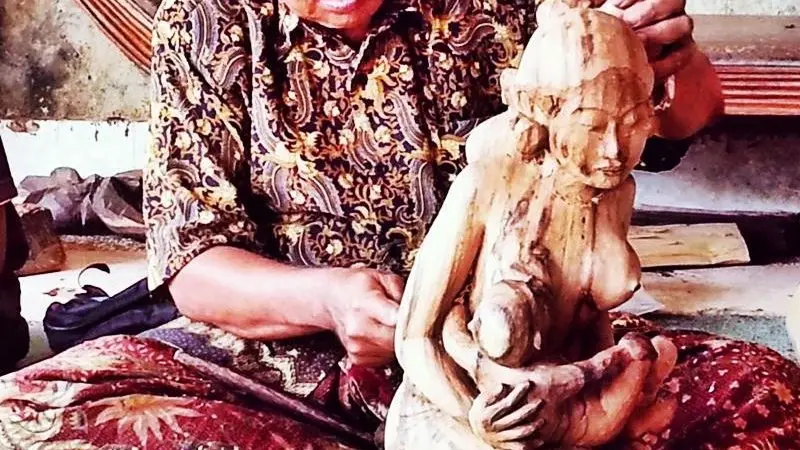
Nestled quietly in the heart of Gianyar, just south of Ubud, Mas Village pulses with a quiet energy. There’s something sacred in the air—perhaps it’s the rhythmic tapping of chisels on wood, or the hushed voices of artisans at work in the shaded courtyards of open-air studios.
This is no ordinary Balinese village. Mas is a living gallery, a cradle of artistic heritage where centuries-old wood carving traditions are kept alive through practiced hands and inspired hearts. Here, culture and craftsmanship flow as naturally as the nearby Ayung River.
The Birthplace of Master Carvers
Mas Village did not merely adopt the art of wood carving—it birthed it. Generations ago, revered spiritual leaders and artisans laid the foundations of this meticulous craft. One legendary figure, Ida Bagus Tilem, transformed Balinese woodcarving in the 20th century, breathing bold, expressive modernism into deeply spiritual pieces. His name still echoes in conversations among carvers and collectors worldwide.
The villagers’ connection to their ancestors isn’t simply nostalgic. It’s instructional. Apprentices don’t just learn technique; they absorb philosophy, ritual, and patience. Every curl of wood contains a story, and every story is passed down with reverence.
An Artistic Philosophy Carved in Wood
Wood carving in Mas is not treated as decoration—it is a dialogue between the artisan and the divine. Balinese Hinduism permeates every stroke of the blade. Themes often depict mythological scenes, gods in meditation, or the swirling dance of good and evil.
What sets Mas apart stylistically is its nuanced realism. Figures seem to breathe, muscles tense in motion, faces caught in fleeting emotion. The mastery lies in detail: the flowing robe of a deity, the feathers of Garuda, the fine grain of sorrow or joy.
Art here is not hurried. It’s ceremonial. Many carvers begin with a prayer before their tools ever touch the timber.
Workshops, Galleries, and Generational Studios
Step into Mas, and you’ll find open workshops lining the village roads, their walls stacked with intricate sculptures in progress. The scent of sandalwood and crocodile wood lingers in the air, mingled with incense and coffee.
Studios like the Tilem Gallery and Njana Tilem Museum stand as pillars of legacy. But even the smaller, family-run ateliers echo with stories. Grandfathers teach grandsons. Mothers sketch next to their daughters. Art here is a family affair, an inheritance passed not through words, but through hands.
Visitors are often invited to observe the process—sometimes even to sit and try. The experience is humbling. One realizes quickly that each carving is more than wood—it’s wisdom.
The Role of Wood in Balinese Belief Systems
In Bali, wood is not a neutral material. It is chosen with intention, often after ceremonies or consultations with a priest. Certain trees—like pule or jackfruit—are believed to hold spiritual energy, making them ideal for temple statues and masks.
The carvings that emerge from these materials are not merely objects. They are vessels. Gods are invited to reside within them during temple ceremonies. Barong masks are carved with reverence and are “awakened” through sacred rituals before performances.
This sacred dimension transforms the work into something deeply profound. For the artisans of Mas, carving is not a profession. It’s an offering.
Sustaining a Timeless Craft in a Modern World
Today, Mas faces a delicate balancing act. The influx of tourism has brought both opportunity and concern. Some fear the dilution of tradition—where art becomes a commodity rather than a calling.
Yet, there is resilience here. Young carvers, while drawn to modern designs, are also reclaiming the philosophical roots of their craft. Organizations and local cooperatives have emerged, promoting sustainable wood sourcing and authentic artistry.
What persists is pride—not in fame or profit, but in continuity. The spirit of Mas is alive not because of preservation alone, but because of evolution with integrity.
How to Experience Mas Village Today
For the traveler seeking more than souvenirs, Mas offers a gateway to something soulful. Visitors are encouraged to walk the village slowly. Visit not only the large galleries, but also the tucked-away home studios. Ask questions. Listen.
Getting around the central region of Bali, especially when visiting traditional villages like Mas, is far easier and more comfortable with a Bali private van hire. It allows you to explore at your own pace, without the rush of scheduled tours, and often comes with the added benefit of a local driver who can share insights along the journey.
If purchasing a carving, look beyond the shine. Seek the story. The best pieces may not be the most ornate, but the ones carved with conviction.
Respect goes a long way. Dress modestly. Greet the artisans. Understand that what you’re witnessing is a living culture, not a staged performance.
Mas Village doesn’t just sell art. It welcomes you into its heart—a place where wood becomes memory, and memory becomes sacred.