Introduction: The Rhythms of Balinese Spiritual Life
Bali’s charm stretches far beyond its emerald rice terraces and golden beaches. At its core pulses a spiritual rhythm — a cycle of ceremonies that shapes the lives of its people. Among the most profound of these are Galungan and Kuningan, twin festivals that celebrate not only faith but the very balance of the universe.
These aren’t just holidays marked on a Gregorian calendar. Calculated according to the Balinese Pawukon calendar, Galungan and Kuningan fall every 210 days, offering an intricate cadence of devotion, family unity, and cosmic reflection.
The Essence of Galungan: Triumph of Dharma Over Adharma
At the heart of Galungan lies an age-old tale, the legend of Mayadenawa — a malevolent king who sought to suppress the practice of dharma, the cosmic law of righteousness. Disguised and cunning, Mayadenawa’s defiance of the gods eventually led to his defeat, symbolizing the eternal victory of good over evil.
Galungan is a living remembrance of this triumph, but more than mythology, it invites every Balinese soul to self-reflect: are we walking in the light of dharma, or are we straying into shadow? The festival is a reminder to nurture harmony within, with others, and with the divine.
The Preparations: Crafting Offerings and Penjor
The days leading to Galungan are a whirlwind of ritualistic craftsmanship. Villages hum with activity as families prepare banten, intricate handwoven offerings made from coconut leaves, flowers, fruits, and cakes. Each component is a conversation with the unseen — a language of gratitude and prayer.
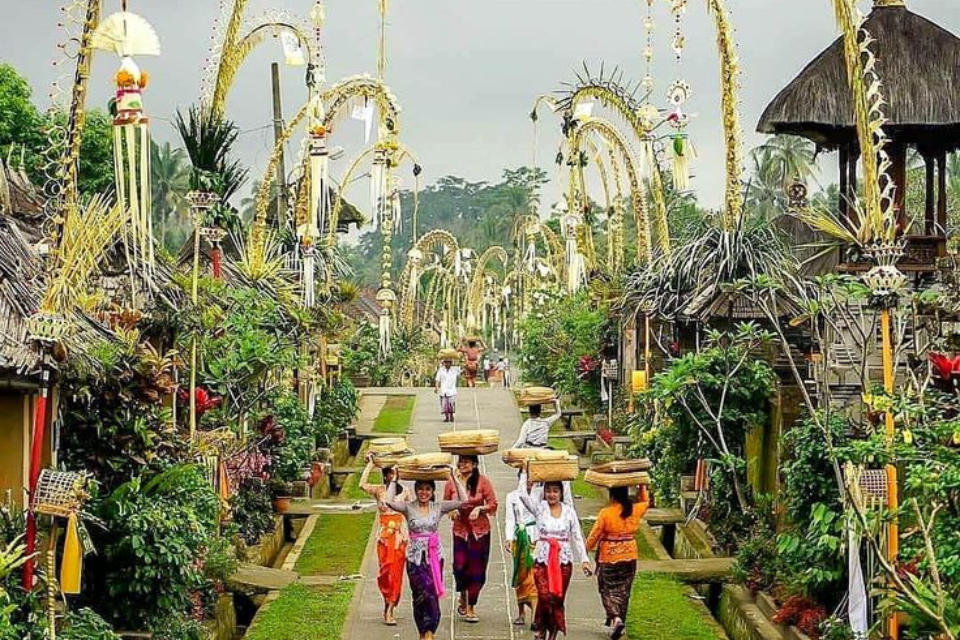
Perhaps the most iconic visual symbol of Galungan is the Penjor. These towering, curved bamboo poles, adorned with woven coconut leaves, fruits, cakes, and sometimes even fabric, arch gracefully over village streets. Each Penjor is more than decoration; it represents prosperity, balance, and the sacred mountain Gunung Agung, believed to be the abode of the gods.
The preparation phase is more than logistical — it strengthens kinship. Family members gather, young and old, to weave, cook, and share stories. The process fosters an intergenerational transmission of tradition, where even the smallest hands contribute to the sacred.
If you’re planning to explore the island during Galungan or Kuningan and want the freedom to move from one village celebration to another, opting for a Bali private van hire can be a smart and comfortable choice. Having a dedicated driver allows you to fully immerse in the cultural experience without worrying about navigation or traffic, especially since many traditional ceremonies happen in remote areas beyond the usual tourist trail.
Galungan Day: When Ancestors Return to Visit
When Galungan dawns, the air is thick with the scent of incense and jepun flowers. It is believed that ancestral spirits descend to the earthly realm, visiting their former homes. Families welcome them with open arms — through prayer, offerings, and the cleaning of family temples.
Temples and household shrines bloom with vivid offerings. Men don crisp white ceremonial attire, and women gracefully carry towering trays of offerings on their heads. Each prayer chanted, each incense lit, becomes a tether between the seen and the unseen, the past and the present.
The day is not solely somber, however. It’s also a time for visiting relatives, feasting on traditional dishes like lawar and satay lilit, and expressing gratitude for life’s blessings. The spiritual and social blend effortlessly, creating an atmosphere of reverent joy.
Kuningan: The Farewell Feast for Ancestral Spirits
Ten days after Galungan, Kuningan marks the end of the sacred period. The word ‘Kuningan’ stems from ‘kuning’, meaning yellow — a color that signifies purity and divinity in Balinese belief. The yellow rice prepared on this day, known as nasi kuning, becomes a symbolic offering of gratitude and peace.
On Kuningan, special offerings called tamyang — small circular palm-leaf decorations — are hung around temples and homes. These are believed to provide protection and guidance, even as the ancestral spirits prepare to depart for the heavens.
Unlike the bustling Galungan, Kuningan feels more subdued and contemplative. The ceremonies are usually held in the morning, for it is believed that the spirits return to their realm before noon. As the sun climbs, the earthly plane gradually returns to its normal rhythm, the invisible guests having bid their farewells.
Experiencing Galungan & Kuningan as a Visitor
For travelers lucky enough to be in Bali during Galungan and Kuningan, the experience is nothing short of magical. Streets transform into avenues of Penjor, and the air hums with a palpable sense of devotion. Visitors will witness local families dressed in ceremonial attire, the sounds of gamelan orchestras floating through the air, and temple courtyards alive with prayers and processions.
While it’s tempting to snap endless photos, the most rewarding way to experience these festivals is with humility and respect. Dress modestly, visit temples only when permitted, and don’t hesitate to accept an invitation if a Balinese family offers you a glimpse into their rituals.
Some of the most vibrant celebrations can be observed in temples like Pura Besakih, Tirta Empul, and village temples in Ubud and Gianyar. These spots offer a closer view of the spiritual dance between the tangible and the ethereal.
Galungan and Kuningan are more than religious festivities; they are living proof of Bali’s harmonious blend of art, community, and spirituality. To witness them is to step, if only for a moment, into the heartbeat of Balinese culture.