Introduction: A Hidden Gem in North Bali
Tucked away in the serene hills of Banjar, just west of Lovina in North Bali, stands Brahmavira Arama Buddhist Temple—a place where serenity takes tangible form. Away from the frenzied pace of southern tourist hubs, this temple whispers calm into the hearts of those who make the journey. Fragrant with incense and silence, it is more than a spiritual site—it is an invitation to exhale.
The Origins of Brahmavira Arama
A Brief Historical Context
Constructed in 1970 and inaugurated in 1973, Brahmavira Arama stands as the largest Buddhist temple in Bali. It was born of a vision to foster peace and understanding in a land predominantly Hindu, illustrating Indonesia’s pluralistic harmony. Initiated under the guidance of the revered Bhante Girirakkhito Mahathera, the temple’s foundation was laid not just with stone, but with deep reverence for Dharma.
The Role of the Indonesian Buddhist Community
Though a minority, the Buddhist community in Indonesia remains resilient and profoundly rooted. Brahmavira Arama was envisioned as a focal point for Indonesian Theravāda Buddhism—a quiet citadel where teachings could flourish and monks could lead a monastic life with dignity. The temple is not merely a structure, but a living heartbeat of Buddhist faith in the archipelago.
Architectural Elegance in Harmony with Nature
Balinese Influence Meets Buddhist Design
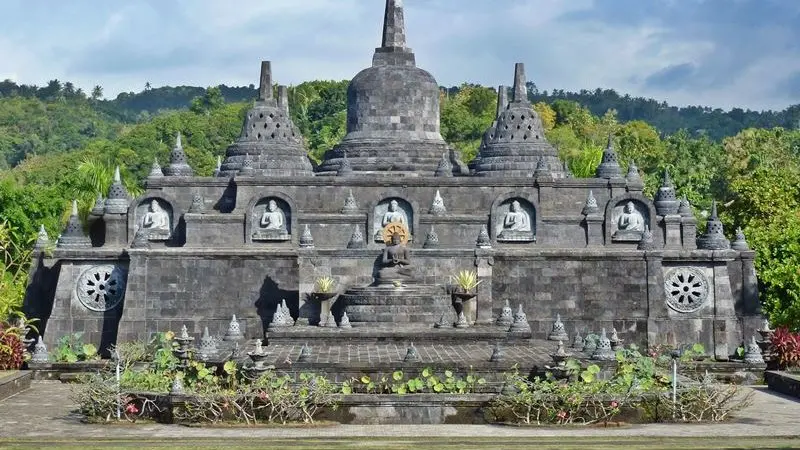
The temple’s architecture harmoniously weaves Balinese artistry with Buddhist symbolism. Intricate carvings, tiered stonework, and ornately patterned gates reflect the island’s aesthetic sensibility, while stupas and statues of the Buddha evoke the universal essence of Buddhist sanctity. It is not a clash of cultures, but a gentle handshake across traditions.
Sacred Spaces: The Vihara, Stupas, and Meditation Areas
Brahmavira Arama is divided into distinct areas, each with a meditative purpose. The Dhammasala hall welcomes teachings and gatherings. The Vihara Giri Sakyamuni, a tranquil sanctuary, houses the main Buddha image. Nearby, stupas stand like silent sentinels under the sky, while tucked corners offer secluded benches beneath flowering trees—perfect for contemplation. Each step one takes within the temple grounds feels deliberate and reverent.
The Symbolism Within the Temple Grounds
Layers of Enlightenment in Stone and Space
Every structure and sculpture holds symbolic significance. The lotus—ever present—reminds visitors of purity arising from murky waters. The winding paths mimic life’s journey toward Nirvana, while the elevation of certain structures represents the ascent to spiritual awakening. This is not a temple to simply view, but one to feel through every careful step.
Borobudur Replica: A Connection Across Time
A striking feature of Brahmavira Arama is its replica of Borobudur, the majestic 9th-century Buddhist monument in Central Java. Though smaller in scale, the replica serves as a spiritual bridge across the archipelago, connecting Bali’s quiet hills with Java’s ancient heights. For many, it evokes a sense of pilgrimage, a reminder that spiritual truth transcends geography.
Spiritual Practices and Pilgrimages
Daily Rituals and Monastic Life
Monks live and practice here with quiet devotion. Chants echo softly through the compound during morning and evening rituals. Offerings of flowers, fruit, and incense are made with gentle hands. Visitors often pause to watch, captivated not by spectacle, but by the purity of intent. Time slows down here, as though kneeling beside each prayer.
Wesak Day and Annual Celebrations
The temple comes alive during Wesak, the sacred day commemorating the birth, enlightenment, and death of the Buddha. Pilgrims in white robes ascend the stairs bearing candles, chanting sutras that ripple through the cool evening air. It is a moment where tradition, devotion, and community merge—a sacred thread stitching together past and present.
Panoramic Peace: Views and Atmosphere
Overlooking Lovina and the Sea
One of Brahmavira Arama’s most beguiling features is its elevation. Perched atop a gentle hillside, it grants sweeping views of terraced plantations and the northern coast. From its balconies, Lovina’s waters shimmer like molten glass under the sun, a vista that feels earned after the quiet climb.
Reaching this hidden sanctuary is made easier with a Bali private van hire —ideal for travelers seeking flexibility, comfort, and the ability to explore at their own pace. Whether arriving from Ubud, Canggu, or the southern beaches, a private van offers a smooth, scenic drive through Bali’s rural heartland, complete with air-conditioned ease and knowledgeable local drivers who often double as informal guides.
The Fragrance of Frangipani and the Sound of Silence
Every sense is gently awakened at Brahmavira Arama. The scent of frangipani dances on the breeze, birds sing softly from banyan trees, and the hush of wind through bamboo feels like nature’s own chant. This isn’t silence as emptiness, but silence as presence—profound, restorative, rare.
A Sanctuary for Seekers and Wanderers
Welcoming All Faiths and Curious Souls
Though rooted in Theravāda tradition, Brahmavira Arama opens its gates to all: the devout, the curious, the weary traveler. It is not a place of conversion, but of communion. One need not know the Dharma to feel its resonance here. The energy of the temple transcends language and belief.
Tips for Visitors Seeking Mindful Retreat
Come in the early morning for mist-draped serenity. Dress modestly and bring an open heart. Cameras are welcome, but pause often without one. Speak in whispers or not at all. Let the temple teach, not just through words or plaques, but through atmosphere and presence. Bring your questions—and perhaps leave with fewer, and lighter ones.
Brahmavira Arama is not just a monument—it is a medicine. In its stillness lies solace. In its stones, stories. And in every breeze that moves through its courtyards, a quiet invitation to dwell more deeply in the moment.