Introduction: Where Time Stands Still in Batuan
Nestled in the cultural heartland of Bali, the village of Batuan offers more than just picturesque rice paddies and traditional paintings. It harbors a spiritual relic, quietly majestic, whispering tales of centuries past—Batuan Temple. Here, the sacred pulses through stone, and every incense-scented breeze carries the echoes of ancient chants. This temple is not just a structure; it’s a living testament to the enduring soul of Balinese Hinduism.
The Birth of Batuan Temple: A Glimpse into the 11th Century
Batuan Temple, or Pura Puseh Desa Batuan, traces its origins to the early 11th century, during the reign of King Sri Dharmawangsa. Its foundation was laid during a transformative era, when Indian Hinduism was harmoniously woven into the indigenous animist beliefs of the island. Inscriptions carved into ancient stone tablets mention this sacred site as a central axis of the community—where divine protection, ancestral worship, and cosmic balance converge.
More than a millennia later, Batuan Temple still functions as the spiritual core of the village, unfazed by the passage of time. It stands as both a sanctuary and a chronicle, quietly preserving the philosophical and ritualistic richness of Balinese Hindu tradition.
Architectural Marvels: Sacred Symmetry and Stone Artistry
The Majestic Candi Bentar and Ornate Gates
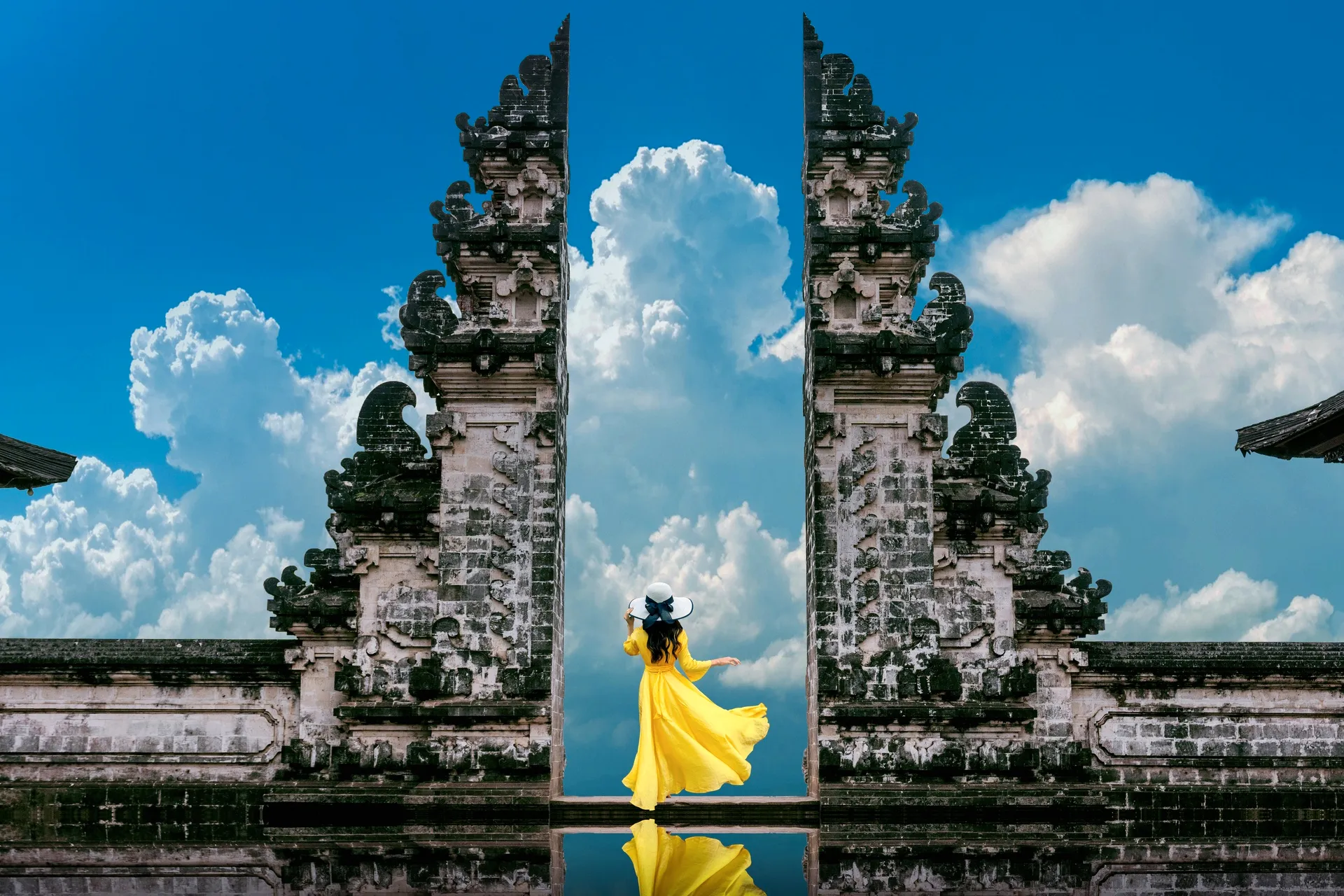
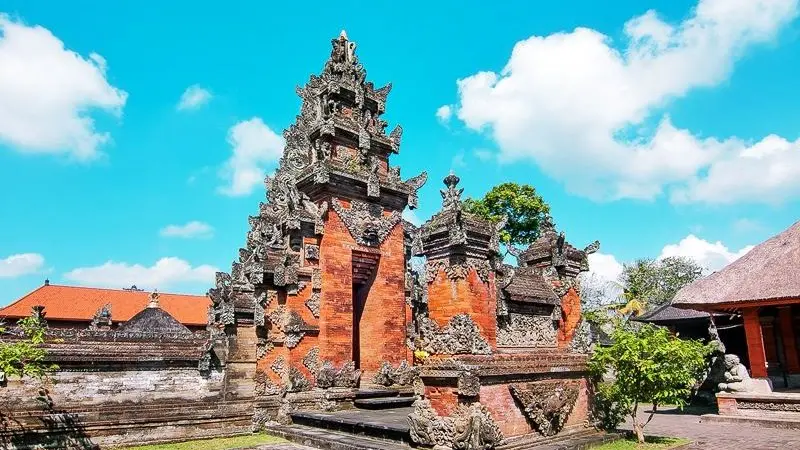
Walking through the split gate, or Candi Bentar, feels like entering another dimension. These gates, bisected perfectly down the middle, symbolize the duality of life: sacred and profane, light and shadow, spiritual and worldly. Beyond them, a cascade of elaborately carved gates leads deeper into sanctified space. Each threshold invites reverence, marking the pilgrim’s journey inward—physically and spiritually.
The gates are not mere portals; they are guardians. Adorned with intricate reliefs, they depict protective deities, mythical beasts, and symbols of purification. Their moss-draped contours glisten after the rain, as if nature, too, bows in reverence.
Sculptural Symbolism and Carvings of Cosmic Narratives
The temple’s surfaces are a labyrinth of stories. Mythological carvings unravel tales from the Ramayana, Mahabharata, and local folklore. Beneath the watchful eyes of stone demons and celestial beings, offerings are laid with delicate precision.
Each sculpture is more than ornamentation—it is theology in stone. From Kala heads symbolizing time’s devouring nature to Naga serpents representing fertility and water, every detail is imbued with metaphysical resonance.
Spiritual Significance: Where Deities Reside and Rituals Unfold
The Role of Tri Mandala in Sacred Spatial Design
Batuan Temple adheres to the ancient Balinese architectural principle of Tri Mandala, the tripartite spatial division. The outermost layer, Nista Mandala, serves as the transitional space between the mundane world and sacred precincts. The middle section, Madya Mandala, hosts communal rituals, while the innermost sanctum, Utama Mandala, is the dwelling of gods.
This spatial choreography mirrors the journey of purification—from the external to the internal, from the seen to the unseen. It is a philosophical blueprint, subtly guiding the devotee toward inner sanctity.
Ceremonies, Offerings, and the Odalan Festival
Rituals at Batuan Temple are a daily symphony. The temple courtyard is never silent—chants, gamelan melodies, and the scent of sandalwood pervade the air. Priests in white robes conduct purification rites, their movements slow and deliberate, as if choreographed by divine rhythm.
The pinnacle of temple life is the Odalan festival, a vibrant commemoration of the temple’s founding day, celebrated every 210 days according to the Balinese Pawukon calendar. During this spiritual jubilee, the temple blossoms in color and fervor. Locals arrive in traditional attire, bearing fruit towers and floral offerings, their faces aglow with devotion.
The Custodians of Heritage: The Batuan Village Community
The Role of Local Brahmins and Daily Temple Keepers
Behind the serene aura of Batuan Temple is a community of guardians. The Pemangku (temple priests) and local Brahmins perform daily rituals, maintaining the temple’s sanctity with unwavering dedication. Their role is more than ceremonial—they are intermediaries between the seen and unseen realms.
Temple caretakers meticulously clean shrines, prepare offerings, and ensure that spiritual protocols are observed. Their humble presence sustains the temple’s soul, silently weaving the threads of tradition through daily devotion.
Traditional Artists and the Temple’s Living Legacy
Batuan is renowned for its distinctive style of painting—meticulously detailed, monochromatic, and mythologically rich. Many of these artists find their spiritual muse within the temple walls. The temple not only serves religious functions but also nurtures artistic expression, acting as a cradle for Balinese creativity.
These artisans, often descendants of the same families for generations, embody the living heritage of the temple. Their work is not separate from worship; it is, in itself, an offering.
Visiting Batuan Temple: A Sacred Encounter for Modern Travelers
Cultural Etiquette and Spiritual Awareness
Visitors are welcome to witness the sanctity of Batuan Temple, but reverence is paramount. Modest attire is required—sarongs and sashes are provided at the entrance. Shoes must be removed before entering inner sanctums, and behavior should remain respectful at all times.
Photography is permitted, but not during prayer sessions or rituals. This is not a museum—it is a living, breathing place of worship. A sense of humility and openness allows for a deeper, more meaningful experience.
Practical Tips for a Respectful Visit
Batuan Temple is located approximately 10 kilometers south of Ubud, easily accessible by scooter or taxi. Mornings are ideal for a visit—before the crowds arrive and while the air still carries the freshness of morning incense.
For a more seamless and comfortable journey, especially if you’re exploring multiple temples or nearby villages, consider opting for a Bali private van hire. It offers flexibility, privacy, and the added benefit of a local driver who often doubles as a cultural guide. This service is ideal for families, small groups, or those seeking to travel at their own pace with a deeper understanding of the island’s traditions.
A small donation is customary, supporting the upkeep of the temple and its ceremonies. Hiring a local guide is highly recommended; their insight adds layers of meaning to what may seem, at first glance, like mere stone and ritual.
In the shadow of banyan trees and under the watchful gaze of guardian statues, Batuan Temple endures. It invites the soul to pause, to listen, and to remember a time when the sacred was seamlessly interwoven with daily life. A visit here is not simply a step into history—it is a step into the living heart of Bali.