1. Introduction: A Hidden Gem in the North
Far from the humming motorbikes and sun-drenched beaches of southern Bali lies a serene enclave cloaked in tropical foliage and tradition. Banjar Hot Spring, tucked in the verdant hills near Lovina, offers a sensory escape into a different tempo of Balinese life—slower, gentler, and deeply restorative.
Unlike the more commercialized parts of the island, this haven whispers rather than shouts. It invites you to pause. To exhale. And to soak in waters that have quietly flowed for centuries.
2. The Healing Waters of Banjar
Fed by subterranean volcanic activity, the hot spring is a mineral-laden gift from the earth. The water, tinged with a soft golden hue due to its high sulfur content, emerges at a soothing temperature of around 38°C (100°F). It’s warm enough to loosen stiff joints but gentle enough to stay in for hours.
Locals have long believed in its therapeutic properties. Soaking here is said to relieve skin ailments, improve circulation, and promote overall relaxation. Even if you’re skeptical, there’s something about the combination of warm water and jungle mist that melts tension like candle wax.
3. Architectural Charm and Surroundings
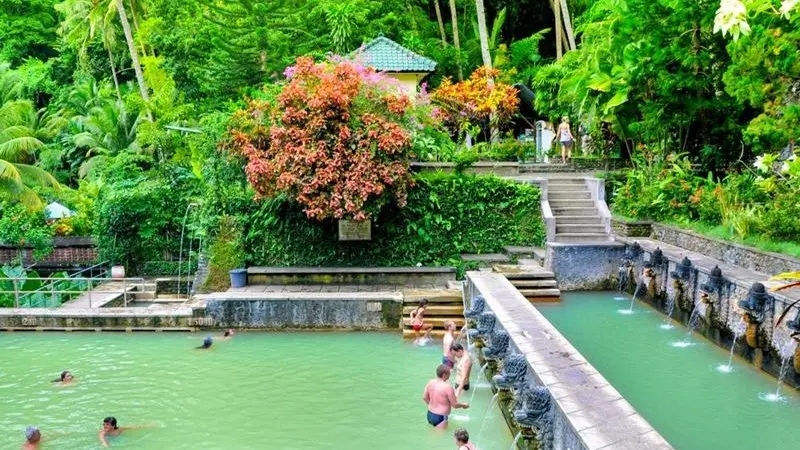
The first thing you’ll notice—beyond the steamy pools—are the stone-carved naga (mythical dragon-serpents) that spew the spring water into the bathing areas. These ornate spouts are more than decorative; they symbolize protection and flow, themes central to Balinese spiritual beliefs.
Surrounding the pools are impeccably kept gardens blooming with frangipani, hibiscus, and heliconia. Butterflies dance lazily in the air. The scent of wet earth mingles with incense from a nearby temple. It’s a multisensory immersion, and it feels like nature and culture are entwined in a slow, balletic duet.
4. A Journey Through Time: History and Culture
Banjar Hot Spring, known locally as “Air Panas Banjar,” has been part of the community’s rhythm for generations. Built during the Japanese occupation in World War II, the spring was later expanded and blessed by local priests. Its spiritual significance endures—many locals believe the water is not only cleansing for the body, but also purifying for the soul.
To the people of Banjar village, the spring isn’t just a tourist spot. It’s a social gathering point, a place for prayer, healing, and community rituals. There’s something quietly powerful about sharing space with both travelers and elders, all soaking in the same ancient waters under the same open sky.
5. Visitor Experience and What to Expect
Banjar Hot Spring is well-maintained yet retains a natural, unpretentious charm. The complex features three tiers of pools, each fed by naga fountains, with the uppermost offering the warmest soak.
Entrance fees are modest—usually under a few dollars—and facilities include changing rooms, lockers, and a small café offering cold drinks and traditional snacks. Bring a swimsuit, a towel, and perhaps a waterproof pouch for your phone.
If you’re planning to explore North Bali comfortably and without stress, consider booking a Bali private van hire with a local driver. It’s a convenient and affordable way to navigate the island’s more remote treasures like Banjar, especially if you’re traveling with family or friends. Your journey becomes part of the experience, with scenic views, flexible stops, and insights from someone who truly knows the land.
Best time to visit? Early morning or late afternoon, when the light is soft and the crowds are thinner. Weekdays are usually quieter than weekends or public holidays.
6. Nearby Attractions and Complementary Activities
Just a short drive uphill from the spring is Brahmavihara-Arama, Bali’s largest Buddhist monastery. With its golden Buddha statues, meditation halls, and mini replica of Borobudur, it’s a sublime place to reflect and extend your inner journey.
For a full day of exploration, pair your visit with Lovina’s gentle black-sand beaches or a sunrise dolphin tour. Northern Bali is a land of subtle wonders—untouristy, underappreciated, and incredibly rewarding.
7. Conclusion: More Than Just a Dip
Banjar Hot Spring is not just a place to bathe; it’s a place to be. To recalibrate. To connect—with nature, with Bali, and perhaps with something within yourself. In a world that often feels frantic and fragmented, this natural oasis reminds us of the beauty of stillness and the quiet magic of warm water under open sky.