Introduction: The Silent Sentinel of Denpasar
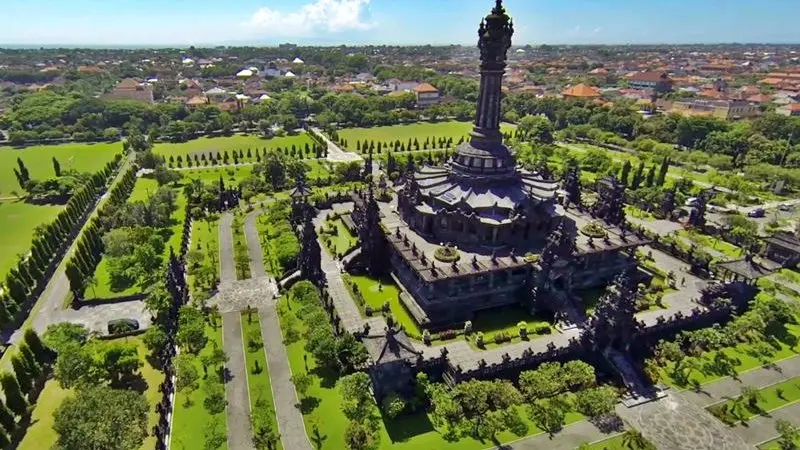
Nestled gracefully in the heart of Denpasar, the Bajra Sandhi Monument rises like a colossal echo of a bygone struggle. With its intricate design and unwavering stance, it stands not merely as a structure of stone, but as a soul-stirring homage to the indomitable spirit of the Balinese people. Surrounded by verdant gardens and a tranquil park, this towering edifice calls out quietly to every passerby: remember what was, honor what remains.
The Historical Significance: Echoes of a Resistant Past
The Bajra Sandhi Monument was conceived not as a vanity project, but as a vessel of memory. It commemorates the valiant struggle of Balinese men and women who stood against colonial domination. From the Puputan Wars to countless unsung battles, the monument encapsulates centuries of perseverance and sacrifice.
Its name is derived from the Sanskrit words “Bajra,” meaning bell or thunderbolt (often associated with sacred weapons in Hinduism), and “Sandhi,” meaning struggle. Together, they form a poetic articulation: the thunderous struggle. Every crevice in this structure reverberates with narratives of resilience—stories that resisted erasure.
Architectural Grandeur: Symbolism in Every Stone
Designed by Balinese architect Ida Gede Yadnya, the monument exemplifies the brilliance of Balinese design, infused with philosophical layers. Shaped like a giant bell (bajra), it mirrors the sacred priest’s bell used during Hindu rituals. But beyond aesthetics, every element is encoded with deeper meaning.
The three-tiered structure symbolizes the Tri Mandala—an essential concept in Balinese spatial philosophy, dividing areas into nista (outer), madya (middle), and utama (inner). The 17 steps at the front, 8 major pillars inside, and the monument’s height of 45 meters—these numbers reflect the date of Indonesia’s independence: 17-08-1945. This isn’t just architecture. It’s a narrative carved in stone.
Inside the Monument: A Journey Through Time
Stepping inside the Bajra Sandhi Monument is akin to opening a timeworn manuscript. The diorama gallery wraps around the inner walls, displaying 33 poignant dioramas that trace Bali’s socio-political evolution—from ancient kingdoms and colonial invasions to the island’s cultural renaissance post-independence.
Each scene is a microcosm of an era. You’ll witness warriors in traditional garb standing against Dutch forces, villagers practicing age-old rituals, and the everyday resilience of a people who’ve long danced between tradition and transformation.
Climbing the spiral staircase to the upper deck reveals a panoramic view of Denpasar—a visual metaphor for perspective, as visitors gaze outward after reflecting inward.
Cultural Reverberations: What Bajra Sandhi Means to the Balinese Today
For the Balinese, this monument is more than a tourist attraction—it’s a spiritual mirror. Schoolchildren visit to learn their heritage, elders pause to reminisce, and artists find muse in its majesty. It anchors the community, reminding them that cultural identity isn’t static—it’s a flame passed from one generation to the next.
Ritual ceremonies are still held within its compound. During national holidays or cultural events, the area comes alive with dances, prayers, and processions—a living monument pulsating with contemporary reverence.
Visitor Experience: Tips, Timing, and Tranquility
The best time to visit Bajra Sandhi Monument is during the early morning or late afternoon, when the golden hues of sunlight trace the contours of the architecture. Entry is affordable, and guides are often available for those craving historical depth.
The surrounding park, Lapangan Niti Mandala Renon, offers a peaceful retreat. Locals jog, picnic, or simply rest under the shade of frangipani trees. It’s a beautiful juxtaposition: a monument born of conflict now nestled in peace.
If you’re planning your day around Denpasar, consider starting here. It provides a poignant, grounding experience before diving into the island’s more touristic destinations.
Exploring Beyond: How to Discover Denpasar Comfortably
Traveling around Denpasar and its hidden gems can be tricky without proper transportation. One of the most convenient ways to explore the area is by opting for a Bali private van hire. This option offers flexibility, comfort, and a local driver who often doubles as an informal guide—perfect for navigating busy streets or discovering off-the-map temples, warungs, or artisan markets. It’s especially useful for groups or families seeking a hassle-free experience.
Conclusion: The Legacy Endures
Bajra Sandhi is not merely an architectural marvel; it is a testament to enduring spirit. Its walls breathe stories, its spires point toward hope, and its silence roars with history. In a world that often forgets, this monument compels remembrance. A quiet place, perhaps—but thunderous in meaning.